One of the key factors in observing children we think may or may not have Attention Deficit Hyperactivity Disorder would be hand movements: finger tapping, hand tapping on surfaces that may produce sounds, like that of a drummer on drums.

They may use a pen to tap on the table or just tap a finger using the nail to create a sound. They may appear listless, touching, twirling, clapping, drumming on invisible drums, strumming invisible guitars, fiddling and all sorts of things that they may do with their hands, they would.

It seems annoying to those looking at them. These hand movements can be used with other actions and tasks that will make them concentrate and pay attention to. One of these activities would be drumming. Whether these drums are those box-looking beat boxes, purchased remo kintekloth tubano key-tuned at musicians friend or the regular drum set, these children may find a way to keep these hand movements positive and enjoyable.

Below is a short video on ADHD and finger tapping:

http://abcnews.go.com/Health/video/adhd-finger-tapping-12924112

One of the things parents and caregivers have these children diagnosed with ADHD would be music and drumming. According to a Psychology Today article:

• Music and drumming: The brain activity is often sonar-driven for stimulation and I have developed specific drumming CDs that we have shown to heighten the frontal lobe activity consistently. […] My point is that there many types of rhythmic music that would accomplish this neurological process.

Other activities in the article made mention of:

  • chewing gum
  • breathing patterns
  • exercising (get them involved in sports)
  • eating the right food (diet of high proteins (at least 50%) and complex carbohydrates every morning - no sugar)

I looked for more articles supporting the idea of drumming for children diagnosed with ADHD and read about this interesting topic.

Zoe Kessler, had an 8-week drumming course for children at risk.

One boy stood out from the rest. He was louder, antsy-er and even more hyperactive than the others, and of course, he won my heart. One day, he was even worse than usual. After class, I approached him.

“So, what’s up?” I asked.

“I forgot to take my medication today,” he said.

“Ohhhh … I get it,” I said.

And he knew that I knew what he was talking about. Knew first-hand. And that there was no judgment, only camaraderie. If only I’d had an adult around like that when I was a kid, I thought. I’m trying to give these kids what I didn’t get when I was an out-of-control, misunderstood, hyperactive ADHD kid. I let them get up and dance, shout, parade around the room with drums, and be kinesthetic in their learning.

Mark Lucas believes drumming lessons can help children with ADHD and had designed programs to help these children learn drumming.

For parents of children diagnosed with ADHD, providing them with activities that will transfer their bountiful energy in activities that will make them move and at the same time concentrate are a big help in helping them manage their behavior.

Teach your child crafts and develop his/her imagination and creativity.

Teaching the “arts” with children is not about giving them crayons and photos to color “within the lines”.

Teaching children creativity does not mean giving them photos where they have to paste colored paper cut-outs and the one who pasted the cut-outs within the line is the most artistic.

No, to these activities I say a big NO.

Give the child an empty paper, different materials that he/can use and you will be surprised how creative the “artworks” turn up. There are, no doubt, children who can create mini-masterpieces once they are not confined to just coloring within the lines. There is no doubt too, that there are children born with an eye for colors and details, an ear for the perfect pitch and a way with words that seem to surpass the young age.

Do not concern yourself so much with “neatness” because there are those who see beauty in a variety of materials available. If you want your place to be neat and orderly and are ruled by too many restrictions, you tend to be less creative.

Untitled

Teach your child crafts if you think painted photos do not present any values.

Paper House

Crafts are wonderful ways to teach children about using materials that are otherwise deemed as junk. Craft products like bags, notepads, wind chimes, paper houses, Christmas tree decorations, gift cards, even personalized wholesale envelope printing are not just usable but can help them earn a bit for themselves.

If you and your child are busy the whole week, take time out for a weekend to do crafting.

Crafting has a lot of benefits and a few are the following:

  • you save money by recycling materials you would otherwise consider as trash
  • you develop your imagination and create new products out of the old ones
  • you unleash your creativity
  • you become a good problem solver
  • you become a good planner and organizer
  • you earn money when people start noticing the things you create

You can give these crafts as gifts too and make people feel good knowing that these were made by your own hands.

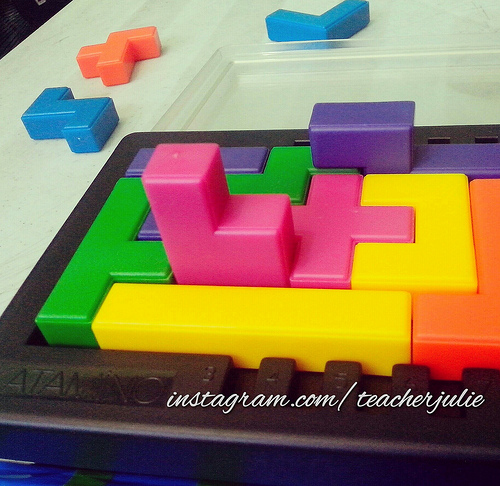
Ever heard of Katamino?

I admit I wouldn’t know what that is if I won’t Google the term.

I bought Katamino a few months back. This is definitely not easy to accomplish even if it looks like it is easy.

Katamino

The photo shows shows the shapes of the Katamino I got. I would prefer the ones made of wood but this will make do for now.

Katamino will test one’s creativity, logic, problem-solving, planning and perception on how things go together. The geometric shapes look easy to fit to make the task done but do not be too sure about how everything fits together.


Yesterday, December 1, 2012, PWD Thanksgiving Celebration was held at the Manila Zoo.

PWD Thanksgiving Celebration at Manila Zoo

Manila Mayor Fred Lim was the guest of honor. He said in his speech the City Hall of Manila employs around 200 PWDs.

PWD Thanksgiving Celebration at Manila Zoo

PWD Thanksgiving Celebration at Manila Zoo

Guests and advocates who delivered messages were John Chua, A PWD Advocate and famous photographer; Engr. Bien Mateo, Chairman of SM Program on Disability Affairs; Mr. Tony Pasia, representing all PWD Organizations.

PWD Thanksgiving Celebration at Manila Zoo

PWD Thanksgiving Celebration at Manila Zoo

PWD Thanksgiving Celebration at Manila Zoo

The guests of the event were treated to intermission numbers by the ASP Dream Girls who sang a medley of pop songs, PHWHIC Kids who did a Gangnam Style dance number and the Nelmida Twins and the Ambassadors of Light who delighted the guests with their songs.

PWD Thanksgiving Celebration at Manila Zoo

PWD Thanksgiving Celebration at Manila Zoo

PWD Thanksgiving Celebration at Manila Zoo

There was also a bird show c’/ Manila Zoo, Ventriloquist Show and Bubble Show .

Photography with a Difference supported the event with the participating groups:

  • ADHD Society
  • Autism Society of the Philippines
  • Down Syndrome Society of the Philippines, Inc
  • Parents Advocates for Visually Impaired Children
  • Parent Council for the Welfare of Hearing Impaired Children, Inc.
  • Philippine Society of Orphan Disorders

The PWD Thanksgiving Celebration was sponsored by the following: City of Manila, Kinder Zoo Adventure Jungle, Canon Philippines and SM Cares Foundation.

A few more photos here.

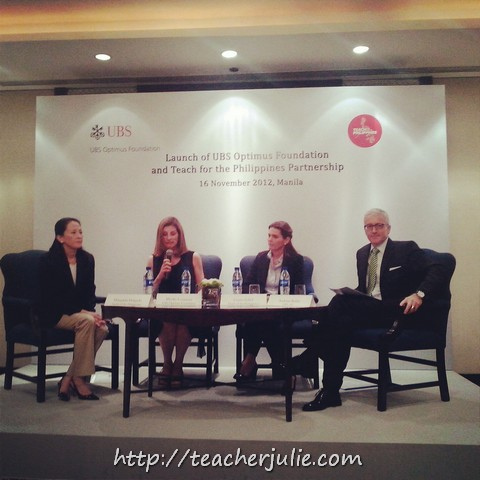
UBS Optimus Foundation partnered with Teach for the Philippines with CHF 1 million or approximately Php43,000,000 grant.

If you are a highly motivated, highly creative and has a heart for changing the lives and quality of education from high needs school, then you are exactly what Teach for the Philippines is looking for. Click here to know more about the application process.

Teach for the Philippines, formerly known as Sa Aklat Sisikat Foundation, is a leadership development program that trains high-potential, highly motivated and creative leaders who are willing to teach at some of the identified high need schools in the Philippines. UBS Optimus Foundation’s grant will support for over five years Teach for the Philippines in promoting educational equality.

Teach for the Philippines and UBS Optimus Foundation presscon

Teach for the Philippines will recruit and train the most promising university graduates and young professional to invest two years to teach at one of the chosen public schools in the Philippines. The UBS Optimus Foundation’s grant will fund the training program, professional development activities and other support programs needed to fully to help the successful chosen teaching fellows in their foray into the public school system.

The inspiration for Teach for the Philippines is from a successful global program Teach for All which has been empowering the world’s most promising young leaders in transforming their nations through education, working to ensure that children who live in poverty have access to excellent education.
UBS Optimus Foundation is delighted to announce our new partnership with Teach for the Philippines. We believe in the importance of human capital and how education can play a transformational role. In Asia Pacific, the Foundation supports 33 projects across 18 countries. We hope our support to Teach for the Philippines can lead to life-changing experiences that will positively shape the future of Philippines’ youth and help them achieve their full potential,” said Kathryn Shih, Board Member of UBS Optimus Foundation.

Lizzie Zobel, Teach for the Philippines’ co-founder and Chairman said: “This innovative new partnership in the Philippines allows us to tap into the talent within our country to build a lasting legacy for the next generation. We are collaborating closely with the Department of Education to enhance the programs which will develop the potential of teachers within the Philippine public education system. Our shared goal with the Department of Education and the local government units is to ensure that all children will have the opportunity to access high quality education. We are proud that the UBS Optimus Foundation has chosen to partner with us, bringing not only funding but global expertise which will help advance our cause.

Wendy Kopp, founder of Teach for All and Teach for America said: “This bold move by the Teach for the Philippines’ team is representative of a society steadfast in its objective to uplift the future generation of your nation. I join them as they take a stand and begin making giant steps to bring us closer to our shared vision – One day, all children in this nation will have the opportunity to attain an excellent education.”

In this new initiative, Teach for the Philippines is working with Massachusetts Institute of Technology’s (MIT) Poverty Action Lab to provide a robust system to measure and evaluate the effectiveness of this program, identify successful elements that can be replicated in future educational projects and disseminate this knowledge to policymakers.

Phyllis Costanza, CEO of the UBS Optimus Foundation on the project: “We look forward to collaborating with Teach for the Philippines on this exciting new educational initiative as co-founders Lizzie Zobel and Margarita Delgado have had a longstanding experience through the Sa Aklat Sisikat Foundation in promoting high quality education for all children, regardless of their background.”

UBS Optimus Foundation has been funding health programs in the Philippines: rabies education and vaccination program in Bohol, controlling and elimination of schistosomiasis, a parasitic disease, in Samar and a project about malaria disease in Palawan.

What is UBS Optimus Foundation:

The UBS Optimus Foundation is an independent grant-making organization which is funded by UBS clients and employees. The foundation’s administrative costs are paid by UBS meaning that 100 percent of all client donations go directly to the projects. The UBS Optimus Foundation’s employees carefully select all projects based on their technical expertise, provide systematic feedback on the program’s implementation and performance, leverage their network of international experts and facilitate an external evaluation of the project.

Since 1999, the UBS Optimus Foundation has supported children in the areas of health, education and child protection with innovative, cost-effective initiatives that impart lasting benefits. The UBS Optimus Foundation is a part of UBS’s dedicated philanthropic support to its clients globally.

Teach for the Philippines
‘Teach for the Philippines’ is a non-profit professional Philippine organization that enlists the Philippines’ most promising future leaders in our mission to promote education equality. ‘Teach for the Philippines’ is an official partner of Teach for All, the prestigious education network with 26 members globally.


The word auditory pertains to hearing.

Here are a few information regarding the word auditory when it comes to learning and language development. There are several intervention methods to improve auditory training to be able to maximize the full learning potential of people, most especially those with needing intervention services.

Aside from undergoing occupational therapy and speech and language therapy with (some) focus on the auditory processes in relation with learning and other developmental concerns, there is an alternative intervention method to improving auditory skills: Auditory Integration Training.

What is Auditory Integration Training? Auditory Integration Training is a method of retraining the ear. AIT was developed in the mid1900’s by Dr. Guy Berard. Dr. Guy Berard is a French ENT doctor who developed Auditory Integration Training to initially correct genetically induced hearing loss.

What does AIT do? AIT is one of the alternative intervention methods that parents can avail for their children who were diagnosed with special needs and needing intervention and therapy.

AIT uses filtered and modulated music to help:

1. Normalize and improve hearing distortions.

2. How children perceive sounds as they develop is very important as this can affect the way they acquire their language skills. Any abnormalities in verbal perception will result in an inaccurate imitation of sound.

3. Improve sensory processing (which is very important for children with sensory issues). Children who have difficulty integrating and interpreting internal and external sensory cues will encounter difficulty in learning to communicate.

4. Improve the ways in which the brain processes auditory information. This in turn impacts on the different areas of the brain that controls the different senses and systems of the body.

5. Stimulate the auditory (as well as vestibular) and neurological systems. The vestibular and auditory systems are closely related and difficulties in this area can impact on speech and language development.

6. Improve sensory overload tolerance and reduce self-stimulating behaviors.

7. Diminishes or resolves behaviors related to sensory defensiveness. People who are sensory defensive often react negatively to or experience anxiety to sensory input that is generally considered harmless to other people. Both painful and uncomfortable, it can impair one’s ability to attend to daily tasks. Example: a child may refuse to join a loud party, have a haircut, or be orally defensive (in the case of an extremely picky eater).

8. Improve speech and language.

9. Improve behavior and learning.

10. Improve mood and social skills.

11. Improve comprehension which impacts on learning which may lead to better academic performance.

What types of problems does AIT (plus other intervention services) help with? In 1998 the US FDA evaluated and approved Auditory Integration Training as a safe and effective way in improving impairments in auditory discrimination associated with the following diagnosis:

  1. Autism Spectrum Disorder
  2. Asperger’s Syndrome
  3. Pervasive Developmental Disoder
  4. Attention Deficit Hyperactivity Disorder
  5. Attention Deficit Disorder
  6. Central Auditory Processing Disorder
  7. Learning Disabilities like Dyslexia, Non-Verbal Learning Disorders, Language Delays and Communication Disorders
  8. Those with Sensory Processing Disorders, Hyperlexia, and Sensory issues can also benefit from AIT

To know more about Auditory Integration Training, contact Sound Therapy Learning Center

Sound Therapy Learning Center Unit 7 3rd Floor, The Promenade Building 198 Wilson St. Corner P. Guevarra 1006 San Juan, Metro Manila
Telephone: (02) 775-8100 Mobile: (0917) 887-7852
Email: bridging2worlds@gmail.com
Website: http://soundtherapy.ph/
https://www.facebook.com/aitph

« Previous -- Next »